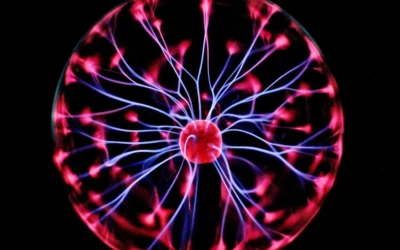
How is an electrostatic discharge generated?
An electrostatic discharge (ESD) is generated whenever two bodies or materials with different static charges are brought into contact and then separated. This phenomenon is known as triboelectricity.
Inevitably, one of the two materials gains electrons and the other loses them, creating an electrical potential difference.Static electricity occurs when positive and negative charges combine.
These energy transfers are permanent and mostly imperceptible. In everyday life, they manifest themselves as a harmless micro-spark when putting on a sweater or rubbing a plastic comb against dry hair.
NB : les matériaux isolants peuvent être porteurs de charges électrostatiques, c’est pour cela qu’il est aussi important de s’équiper en matériel ATEX.
What is electrostatic risk?
Electrostatic discharges only become dangerous if the static charge is allowed to build up for too long.
On an industrial site, ESD can damage electronic equipment. Electrostatic charge can accumulate on insulated metal equipment, insulating materials or non-conductive powders and liquids.
Staff may also be at risk from wearing insoles or an insulating floor.
In ATEX zones, where flammable gases, liquids and powders are frequently used, the electrostatic risk is particularly present.
Besoin d’un devis ?
Produits de signalisations sonores et lumineuses, systèmes de mise à la terre, signalisation non ATEX, connections ATEX…
If an electrostatic discharge occurs in an explosive atmosphere, ignition and/or explosion can occur.
The consequences ofstatic electricity and electrostatic hazards on materials and personnel must be understood.

How to prevent electrostatic hazards in explosive atmospheres?
Assessing electrostatic risk
A priori, l’évaluation des risques industriels sur un site industriel ou SEVESO devrait permettre d’estimer les risques de décharge électrostatique. Pour ce faire, il s’agit de procéder à un audit – à réaliser grâce à un organisme certifié :
- Identify flammable atmospheres for each zone and assess the energy required to ignite them.
- Estimate the sensitivity of a flammable or explosive atmosphere to ignition. The sensitivity of an area to ignition is measured in EMI (minimum ignition energy).
- Quantify the energy of discharges that may occur, and estimate their different energy levels in different areas and situations.
- Compare the energy that can be released in the event of a discharge with the energy required to cause an explosion or ignition, depending on the zone.
- Study the ability of equipment and materials to retain or accumulate static electricity.
Mastering electrostatic phenomena
Once the electrostatic risk assessment has been completed, it is generally necessary to take additional protective measures in ATEX zones:
- Remove insulation products not required for industrial activities.
- Éviter la création de charge électrostatique grâce à des systèmes de mise à la terre performants ou à une liaison équipotentielle.
- Opt for anti-DES PPE: shoes, gloves, wristbands.
Do you want to minimize the impact of electrostatic hazards in ATEX zones?
ADF Systèmes met un point d’honneur à vous guider dans le choix des produits et solutions les plus adaptées selon vos problématiques de sécurité industrielle et de gestion des risques. Pour mieux connaître les risques de DES, téléchargez notre guide dédié à la mise à la terre.