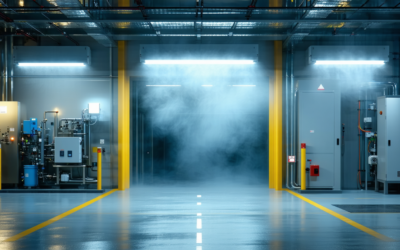
With increasing industrialization, the concepts of ATEX and explosive atmospheres are taking on a crucial dimension. ATEX, a term derived from European Directive 94/9/EC, aims to prevent explosions in environments where oxygen and flammable substances are mixed. These...
Non catégorisé
LED, xenon or halogen? Choose the right beacon for your ATEX zone
LED, xenon or halogen beacon: the choice may seem trivial to some, but it directly determines the safety, performance and compliance of your installation in an ATEX (explosive atmosphere) zone. Lighting technologies are evolving rapidly, driven by innovation from...
How to ensure lighting compliance and safety in ATEX zones?
ATEX lighting plays a key role in safeguarding industrial environments where there is a risk of explosion. In these sensitive zones, every piece of equipment must meet strict requirements to limit any danger. Between rigorous regulations and the choice of appropriate...
Find out about safety measures for hydrogen-related ATEX zones
As hydrogen plays a growing role in the energy transition, it's important to master the regulations and safety measures applicable to hydrogen ATEX zones. This article will help you to better understand these requirements and guarantee optimum protection for your...
What are the electrostatic risks associated with hydrogen?
Hydrogen is an increasingly important player, especially since renewable energies are gaining ground in industry. However, it is essential to consider the electrostatic risks associated with its use. The main risks associated with hydrogen in an industrial...
IEC 61340-4-4 and NFPA 77: your reference guides to electrostatic grounding
When it comes to electrostatic safety, the IEC 61340-4-4 and NFPA 77 standards are essential references. These guidelines provide you with a rigorous framework for electrostatic grounding, guaranteeing the protection of your installations and the prevention of fire...
Combustible dust and electrostatic risk in ATEX zones: how can you ensure that your processes are properly grounded?
ATEX zones present high explosion risks due to the presence of combustible dusts and electrostatic hazards. Ensuring that equipment is properly grounded is crucial to preventing these hazards. Discover best practices and solutions for securing your industrial...
Evacuating high-risk areas in industrial environments: what solutions are available to warn people?
In an industrial environment, safety is paramount, which is why it's essential to think about how to evacuate hazardous areas. But what are the solutions for alerting employees to danger? Find out how to anticipate and react effectively to emergency situations to...
What are the different classifications of explosive dusts?
A major risk in many industrial sectors, explosive dusts need to be monitored to avoid unpleasant surprises. To better understand and manage them, various classifications have been established. We invite you to discover these different categories, and the specific...
What is ATEX?
Every year, numerous ATEX-related accidents occur at high-risk industrial sites. These accidents are often the result of a lack of awareness of the dangers associated with potentially explosive atmospheres, and a lack of preventive and protective equipment. However,...