ATEX lighting plays a key role in safeguarding industrial environments where there is a risk of explosion. In these sensitive zones, every piece of equipment must meet strict requirements to limit any danger. Between rigorous regulations and the choice of appropriate devices, guaranteeing lighting compliance and safety in ATEX zones requires a methodical approach.
The challenges of lighting in ATEX zones
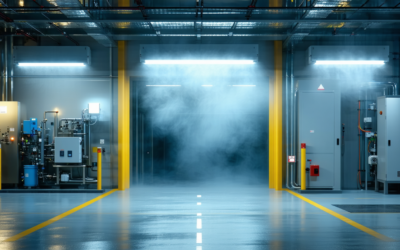
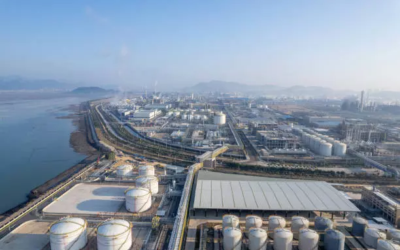
ATEX zones correspond to environments where flammable gases, vapors or dusts can create an explosion hazard in the presence of an ignition source. These explosive atmospheres can be found in many industrial sectors, including refineries, the chemical industry, agricultural silos and pharmaceutical production sites.
Unsuitable ATEX lighting can be a risk factor due to the heat it generates or the electric arcs it can produce. This is why the use of ATEX-certified solutions is imperative to avoid any incidents. A compliant device guarantees both worker safety and the continuity of industrial activities, by reducing interruptions due to breakdowns or technical incidents.
Regulations and standards for ATEX-compliant lighting
The use of equipment in ATEX zones is governed by strict regulations, in particular by European Directive 2014/34/EU which defines safety requirements for electrical and mechanical equipment used in explosive atmospheres. These regulations require every luminaire intended for these zones to be tested and certified before being placed on the market.
IEC/EN 60079 standards specify the design and manufacturing criteria for ATEX equipment, taking into account the specific features of the various hazard zones. Compliance with these requirements ensures that lighting does not act as a trigger in the presence of flammable substances. Products are identified by specific markings, indicating the protection level and category of the equipment.
Choosing the right ATEX lighting depends on a number of criteria, including the technology used, resistance to environmental conditions and equipment life. Today, LED lighting is the preferred choice for its low heat emission, low energy consumption and long life. To meet the needs of industry, solutions must adapt to the constraints of different environments, whether for fixed, portable or emergency lighting.
Criteria for ATEX lighting safety and durability
Opting for ATEX lighting goes beyond regulatory compliance. The robustness of the equipment is also a determining factor. These devices must withstand shock, vibration and temperature variations, particularly in demanding environments such as petrochemical sites or mining installations.
Waterproofing also plays a fundamental role. Lighting designed for an ATEX zone must be protected against dust and humidity, to avoid any infiltration that could compromise its proper operation. Protection ratings, such as IP66 or IP67, can be used to assess a luminaire’s resistance to external aggression.
Regular maintenance of equipment is another essential condition for ensuring the longevity of installations. Frequent checks ensure that equipment is in good condition, and prevent any malfunctions that could endanger workers. Rigorous monitoring limits business interruptions and ensures better management of equipment replacement costs.
ADF Systèmes’ support for optimum ATEX compliance
Manufacturers faced with the requirements of ATEX zones need to be able to rely on solutions tailored to their specific needs. ADF Systèmes supports these players with a complete range of ATEX lighting solutions designed to meet the most stringent requirements.
Thanks to its proven expertise, the company is able to provide personalized advice to each customer, guiding them towards the most appropriate solutions. This support goes beyond the simple supply of equipment, to include an in-depth analysis of site requirements and assistance in complying with current regulations.
The diversity of industrial environments calls for a tailor-made approach. ADF Systèmes offers equipment adapted to different risk zones, taking into account installation constraints and operational requirements. This ability to adapt to a variety of situations enables us to provide concrete answers to the challenges of safety and energy performance.
In a context where risk control is an absolute priority, guaranteeing ATEX-compliant, safe lighting is a strategic issue for industrial companies. Compliance with regulations, the choice of appropriate solutions and rigorous monitoring of installations ensure optimum working conditions while reducing the risk of incidents.