In such cases, the risks of static electricity must be analyzed and an action plan drawn up to ensure the long-term safety of your equipment and personnel.
What is static electricity? What are the factors involved in electrostatic discharge accidents? How can I protect myself against ATEX risks? We explain.
What is static electricity?
Electricity refers to the movement of electrical charges. Every object or material is made up of atoms, which are themselves charged with electrons.
The latter revolve around the nucleus, which in turn is made up of protons and neutrons. The electric charge of the whole is considered neutral.
Quand on parle d’électricité statique (ES), on parle d’un déséquilibre des charges électriques à l’intérieur ou à la surface d’un ou plusieurs objets. Lorsque l’on frictionne deux matériaux entre eux, une partie des électrons est arrachée aux atomes et s’accumule sur la surface de l’un ou de l’autre.
Because they remain momentarily on the surface of materials, they form what is known as static or stationary (i.e. immobile) electricity, present most of the time in small quantities.
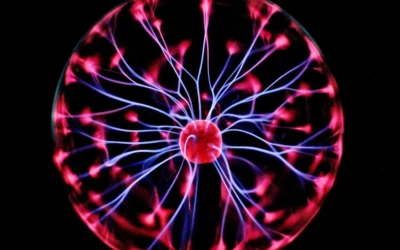
This can sometimes take the form of sparks, visible only to the naked eye and fortunately harmless. This phenomenon is known as electrostatic discharge (ESD ).
The more insulating an object is, the more charge it can accumulate, and the greater the risk of electric shock.

What are the risks of static electricity?
Bien qu’elle soit invisible, l’électricité statique représente un risque matériel et humain important au sein des zones définies ATEX. Ainsi, les décharges électrostatiques peuvent rapidement devenir dangereuses :
- if the charges formed on the surface of a material cannot be earthed;
- if the charges formed on the surface of a material are not earthed quickly enough;
- if the charges formed continue to accumulate on the surface of a material and reach a level sufficient to cause an electric discharge.
In addition, accidents caused by over-accumulation of static electricity are of different kinds:
- Human risks: to a lesser extent, from frequent blows of juice on workers to serious personal injury accidents (burns, electric shocks) due to insulating soles or floors.
- Risques matériels : en atmosphère ATEX, l’électricité statique peut aller jusqu’à provoquer des inflammations et des explosions. Elle peut également être à l’origine de perturbations dans le fonctionnement des unités de fabrication par accumulation de poussières ou même de détériorations de matériel électronique. Ces zones nécessitent un coffret ATEX.
To pick up on this last point, ESD can indeed damage electronic equipment. Electrostatic charge generally accumulates on insulated metal equipment, insulating materials or non-conductive powders and liquids.
In ATEX zones, where flammable gases, liquids and powders are frequently used, the electrostatic risk is particularly present.
The consequences of static electricity and electrostatic hazards on materials, but also on personnel, need to be understood.
What are the main causes of electrostatic accidents?
The following is a non-exhaustive list of operations involving risks related to static electricity* :
- Transfer of petroleum liquids ;
- Tank cleaning and misuse of extinguishing systems ;
- Spillage of powders in ATEX atmospheres (gases, flammable liquid vapors, powders);
- Disruptive phenomena caused by electrically charged human beings (usually electrically isolated from the earth by insulating soles);
- Use of non-conductive solvents in installations with insulated metal parts, insulating surfaces or pipelines not suitable for pneumatic conveying;
- Lack of equipotentiality between equipment (hence the need to always check equipment markings).
Besoin d’un devis ?
Produits de signalisations sonores et lumineuses, systèmes de mise à la terre, signalisation non ATEX, connections ATEX…
How to prevent the risks associated with static electricity in explosive atmospheres?
As a reminder, an ATEX (or ATmosphère EXplosible) is an atmosphere where one or more explosions can potentially take place.
Assessing electrostatic risk
A priori, l’évaluation des risques industriels sur un site industriel ou SEVESO devrait permettre d’estimer les risques de décharge électrostatique. Pour ce faire, il s’agit de procéder à un audit – à réaliser grâce à un organisme certifié :
- Determine the ATEX atmospheres for each zone and assess the energy required to ignite them.
- Estimate the sensitivity of a flammable or explosive atmosphere to ignition. The sensitivity of an area to ignition is measured in EMI (minimum ignition energy).
- Quantify the energy of discharges that may occur, and estimate their different energy levels in different areas and situations.
- Compare the energy that can be released in the event of a discharge with the energy required to cause an explosion or ignition, depending on the zone.
- Study the ability of equipment and materials to retain or accumulate static electricity.
Mastering electrostatic phenomena
Once the electrostatic risk assessment has been completed, it is generally necessary to take additional protective measures in ATEX zones:
Working environment
- Optimize ventilation to limit the concentration of air-gas or dust-gas to below the explosive threshold;
- Humidify the air;
- Opt for antistatic (non-insulating) floors and floor coverings;
- Éviter la création de charge électrostatique grâce à des systèmes de mise à la terre performants ou à une liaison équipotentielle.
- Use antistatic materials and equipment.
Chemical products
- Replace flammable solvents with non-flammable solvents or solvents with a higher burning point;
- Add antistatic products to certain flammable liquids to reduce their resistivity.
Employee protection
- Opt for anti-DES personal protective equipment (shoes, clothing, etc.)
- Train personnel working in ATEX atmospheres in electrostatic risks.
In conclusion, don’t underestimate the phenomenon of static electricity, as its consequences are far from harmless.
Do you want to minimize the impact of static electricity in ATEX zones?
ADF Systèmes met un point d’honneur à vous guider dans le choix des produits et solutions de sécurités industrielles les plus adaptées selon vos problématiques de sécurité industrielle et de gestion des risques. Pour mieux connaître les risques de DES, téléchargez notre guide dédié à la mise à la terre.