


Industrial safety consulting
Discover our tips & news on industrial safety
Risk assessment and ATEX audit: how to control the risk of explosion?
At present, the prevention of risks in explosive atmospheres (ATEX) is strictly regulated by European directives and several decrees issued in 2002-2003. These require the implementation of a genuine risk analysis approach, based on the need to carry out regular...
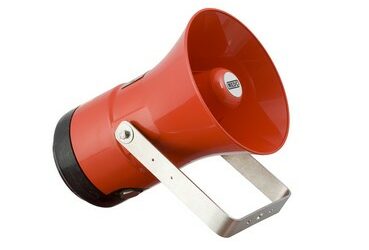
What is GRP fiberglass? All you need to know about this material!
Since the beginning of the 20th century, GRP fiberglass has been used in a wide range of industrial applications. Originally used to insulate buildings, it is now widely used in the aeronautics, automotive and construction industries. What is GRP fiber? How is it...

All you need to know about the explosion of a dust cloud caused by static electricity
Between 1903 and 2010, 190 dust explosions were recorded in the ARIA database of the Bureau d'Analyse des Risques et Pollutions Industriels (BARPI). There have also been numerous dust explosions due to the accumulation of electrostatic charges on equipment. The...

All about ATEX temperature classes
Since 2014, regulations have required new equipment installed in ATEX atmospheres to meet the requirements of Directive 2014/34/EU. It covers the conformity of ATEX equipment and installations in industrial environments. Equipment must be marked as follows: EX -> d...

Changes to ATEX marking standards
Since the first directives on potentially explosive atmospheres came into force, the ATEX regulations have undergone a number of changes. In response to the ever-increasing need to reinforce the safety of industrial sites, organizations such as CENELEC and IEC are...

What is ATEX?
Every year, numerous ATEX-related accidents occur at high-risk industrial sites. These accidents are often the result of a lack of awareness of the dangers associated with potentially explosive atmospheres, and a lack of preventive and protective equipment. However,...

Static electricity and risks in potentially explosive atmospheres
Dreaded and dreaded in ATEX zones,static electricity requires special attention. The phenomenon is unavoidable and can present a danger on industrial sites, both to the durability of equipment and to the health and safety of personnel. So how do you protect yourself...

All you need to know about PPE for ATEX zones, also known as ATEX PPE
On a high-risk industrial site, it is customary to identify hazardous areas and workstations by means of an occupational risk assessment. This approach, coupled with ATEX zoning, helps determine which protective measures and policies need to be put in place. It is...

Occupational risk assessment in industrial environments
Assessing potentialoccupational hazards is a mandatory practice on any high-risk industrial site - or not. This approach makes it possible to identify the risks present for workers on site, and to implement a prevention and protection policy adapted accordingly. How...

Rules to remember about safety signs in the workplace – Illuminated and acoustic signs
Under current regulations, workplace safety signs must be installed whenever, in a workplace, "a risk cannot be avoided or prevented by the existence of collective protection or by the organization of the work". In the same way that an employer must prominently...
See all our products
Sound and light signalling products, grounding systems, non-ATEX signalling, ATEX connections…