On a high-risk industrial site, it is customary to identify hazardous areas and workstations by means of an occupational risk assessment.
This approach, coupled with ATEX zoning, helps determine which protective measures and policies need to be put in place. It is also a good idea to opt for the appropriate PPE, especially for the most dangerous zones, i.e. ATEX.
Here’s everything you need to know – not about ATEX PPE, but about PPE in ATEX zones.
What is PPE?
The French Labor Code requires employers to protect their employees from all workplace hazards.
In addition to the implementation of collective protection measures and theacquisition of ATEX equipment in high-risk areas, personal protective equipment (PPE) is needed to protect workers exposed to particular risks, particularly in the course of their work.
“Personal protective equipment (PPE) is a device or means intended to be worn or held by a person in order to protect them against one or more risks likely to threaten their health and safety.
French Labor Code (article R.233-83-3)
The most common PPEs include :
- Protective gloves
- Safety footwear
- Construction helmets
- Hearing and eye protection
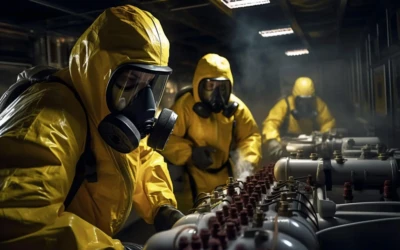
- Protective suits, etc.
ATEX PPE is commonly referred to. But it’s better to talk about PPE for ATEX zones. PPE for ATEX zones – or not – can be installed on industrial sites following a risk assessment. The workers who wear them must be specifically trained in their use.
Of course, PPE must be regularly checked and maintained to ensure its effectiveness.

What is an ATEX zone?
ATEX zones correspond to Explosive Atmospheres located on high-risk industrial sites.
These result from a mixture of air and combustible substances of all kinds. These include solvent vapors, aerosol gases and wood dust.
These fuels are said to be hazardous when they are present in sufficient proportions to cause an explosion and/or ignition.
Whereas a fire spreads gradually, an explosion involves almost immediate combustion. It causes not only a massive blast effect, but also the appearance of flames and an unbearable heat wave.
In other words, here’s the perfect calculation for determining ATEX:
Presence of an oxidizer (oxygen) and a fuel in certain proportions + pressure + presence of an ignition source = increased possibility of explosion.
ATEX zones are also precisely classified according to the relevant standards.
Why use PPE in ATEX zones?
Because every workplace has its own specific features, there are PPEs specific to certain sectors, particularly in industry.
For example, there are PPEs designed for explosive atmospheres:
- Antistatic protective gloves In ATEX zones, these gloves can rapidly dissipate electrostatic charges following contact with a live object.
- ATEX flashlights: these explosion-proof torches are reserved for use in ATEX zones. They are generally compatible with ATEX zones from 0 to 2/22. This is ATEX PPE, which is itself certified.
- Portable gas detectors: these invaluable devices estimate the concentration of one or more gases in the atmosphere. Combined with other equipment such as vibrators and audible and optical alarms, these detectors react immediately when gas concentration exceeds a certain threshold.
These individual tools are recommended for every worker operating in an ATEX environment. In addition to protection systems for the entire high-risk site, this ATEX zone PPE helps prevent explosions and avoid major damage.
Of course, they can be combined with optical and/or audible alarm systems such as PPI sirens or flashing lights. These general warning systems are so effective that they immediately detect any anomaly in an ATEX zone.
Would you like to enhance the safety of your ATEX zones?
ADF Systèmes makes it a point of honor to help you choose the products and solutions best suited to your industrial safety and risk management needs.