- Understanding ATEX
- Understanding ATEX regulations
- Draw up a safety plan to minimize industrial risks and protect employees.
What are explosive atmospheres (ATEX)?
The formation of an explosive atmosphere (ATEX) results from the presence of three elements:
- A fuel is a flammable material. It can be gas, vapor or dust.
- An oxidizing agent, once combined with the fuel, enables combustion. This is generally oxygen from the air.
- A source of ignition, i.e. a sufficiently large energy source (minimum ignition energy) or a sufficiently high temperature (self-ignition temperature). These may include electrical or mechanical sparks, open flames, electrostatic discharges, etc.
An explosive atmosphere can therefore provoke an explosion, which consists of almost instantaneous combustion, unlike fire, which is more gradual. The explosion is accompanied by a hot blast effect, flames and detonation.

What are the current ATEX regulations?
The regulations governing explosive atmospheres transpose two European directives(2014/34/EU or ATEX 95 for equipment intended for use in ATEX zones, and 1999/92/EC or ATEX 137 for worker safety) into a single French regulation.
These regulations require all site managers to ensure that the risks associated with explosive atmospheres are managed in the same way as all other industrial and occupational hazards.
As such, ATEX regulations distinguish between different explosive zones and oblige facility managers to mark these zones. The aim of this zoning is to adapt or readapt the equipment present on site according to the degree and type of danger, in order to limit the risks.
This process also protects employees. There are several categories of zone:
- 0: explosive atmosphere present permanently or over long periods during normal operation.
- 1: explosive atmosphere occasionally present during normal operation.
- 2: explosive atmosphere present accidentally, in the event of malfunction or short-term operation.
This classification is based on an analysis of the source of the release of flammable gas or vapors, and on ananalysis of the ventilation of the area where the release occurs.
A risk zone is therefore defined according to the frequency and duration of the presence of ATEX.
To find out more about ATEX regulations, see our article on ATEX standard NF EN 60079-10-01.
Besoin d’un devis ?
Produits de signalisations sonores et lumineuses, systèmes de mise à la terre, signalisation non ATEX, connections ATEX…
What preventive measures should be taken in the event of an explosive atmosphere?
The aim is to prevent ATEX risks for the site, equipment and people:
Prevent the formation of an explosive atmosphere
- Act on fuels: replace products if necessary, control handling, etc.
- Act on the oxidizer: introduce inert gas to deplete the air of oxygen and thus limit the risk of possible ignition.
Limiting ignition sources
- Remove flammable material from ATEX zone
- Provide suitable cooling systems
- Carry out regular checks onsafety and detection equipment.
- Opt for adapted to the ATEX zone (without potential sparks)
Raising employee awareness
- Strict protocols for use.
- Preventive plans for all areas.
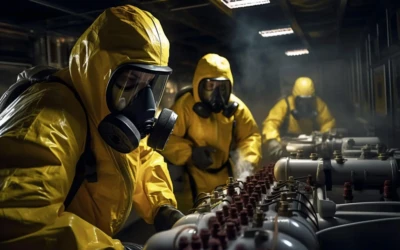
- Requiring employees to wear appropriate PPE.
- Training employees in chemical, technological and industrial risks.
Do you work on an industrial site with potentially explosive atmospheres?
ADF Systèmes is committed to helping you choose the products and solutions best suited to your industrial safety and risk management issues, particularly ATEX.