

Industrial safety consulting
Discover our tips & news on industrial safety
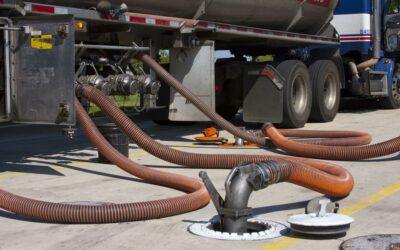
How to secure truck unloading?
Transferring hazardous chemicals between sites is a delicate operation. When a truck or tanker is unloaded into a storage tank, meticulous attention must be paid to the safety of personnel and cargo. A chemical leak represents a real danger to people, equipment and...

Which public address systems for which applications?
In establishments open to the public (ERP), the public address system is an essential element in guaranteeing people's safety. In recent years, the acoustic quality of buildings has been improved, not only to guarantee the comfort of visitors, but also to comply with...

How do you set up a PPMS?
The Plan Particulier de Mise en Sécurité (PPMS) is a mandatory scheme within all schools(circular n°2015-205 of November 25, 2015). Kindergartens, primary schools, secondary schools and high schools are all involved in this process, which is designed to protect...

All you need to know about the Internal Operation Plan (POI)
A real tool in the event of a crisis situation, the internal operations plan (POI) is designed to ensure the safety of property, people and the immediate environment of specific establishments. In accordance with Articles L515-41 and R181-45 of the French Environment...

Grounding tanker trucks: why and how?
When it comes to safety, ATEX atmospheres deserve special attention. It is essential to eliminate all potential sources of ignition to avoid the risk of explosion, and to ensure that industrial safety is beyond reproach. To prevent the risk of explosion due to...

ATEX and IECEx standards: what are the differences?
As you may know, there is a plethora of standards and standardization systems designed to manage the risks associated with explosive atmospheres. While some are specific to the European Union and France, such as ATEX, others are more widely used internationally, such...
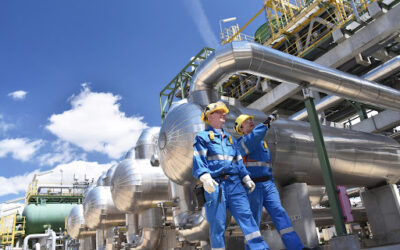
Explosion protection: 7 tips for choosing ATEX equipment
Explosion protection refers to all materials and equipment used to prevent explosions. Its function is to prevent explosions, or at least to limit their dangerous effects if they do occur. In general, there are three types of protection against the risk of...

LEL UEL: what is the Lower or Upper Explosive Limit?
The explosive range of gases and vapors is a key indicator of worker safety in ATEX zones. Indeed, managers of industrial sites with ATEX atmospheres often lack knowledge of the explosive limits of these substances. Knowing LELs and UELs is essential, but detecting...
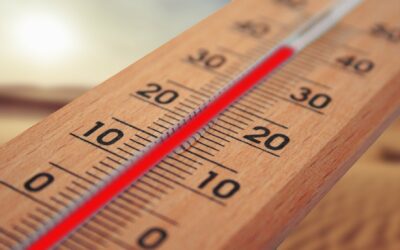
All you need to know about auto-ignition temperature
Flammable gases and liquids are the cause of many fires and explosions, and must be handled with particular care in ATEX zones. Indeed, certain substances can self-ignite under certain conditions. Here's everything you need to know about self-ignition temperature....

ATEX certification: what levels and obligations?
To be able to work in an ATEX zone, employees must have ATEX authorization. This corresponds to the hazard level of the zone in which they may or may not be working, and to the type of electrical or mechanical equipment used. How doesATEX certification work? How is it...
See all our products
Sound and light signalling products, grounding systems, non-ATEX signalling, ATEX connections…