


Industrial safety consulting
Discover our tips & news on industrial safety

What is the role of emergency communications in industrial risk management?
Industrial sites operate in a complex environment, where risks - fire, chemical leaks, explosions, technical incidents - can escalate in a matter of seconds. In this context, the ability to disseminate clear, immediate and comprehensible information is a cornerstone...
ATEX equipment maintenance: everything you need to know
In high-risk industrial environments, ATEX regulations impose strict rules to prevent explosions linked to explosive atmospheres. These requirements apply to the design, installation and maintenance of equipment. ATEX maintenance guarantees not only the safety of...

ATEX and protection against electrostatic discharges: best practices
In industrial environments classified as ATEX, risk control is an absolute priority. Among these risks, electrostatic discharges are a silent but formidable threat. Often invisible to the naked eye, they can be enough to trigger an explosion in an atmosphere charged...

Why are optical warning devices essential in noisy environments?
In many industrial environments, ambient noise levels are so high that it becomes difficult, if not impossible, to clearly distinguish a sound signal. Seveso sites, ATEX zones and production workshops are all places where team safety depends on the ability to quickly...
How do you ensure effective earthing in industrial environments?
In high-risk industrial environments, electrical safety is an absolute priority. Among the essential protective devices, industrial earthing plays a fundamental role in preventing serious incidents such as electrocution, fire or explosion. When an industrial site...
Regulatory requirements for industrial alarm systems
In high-risk industrial environments, safety cannot be left to chance. Whether to prevent an explosion, report a gas leak or ensure rapid evacuation of a site, alarm systems play an essential role. But their implementation is not just a matter of common sense or...

EN13241-1 standard for industrial doors
In an industrial environment where personal safety and regulatory compliance are top priorities, every piece of equipment must meet stringent requirements. Industrial doors, as essential elements of both access and protection, are no exception. It is in this context...
Risks of explosive vapors: how to protect yourself?
In industry, the management of flammable volatile substances represents a major challenge for the safety of workers and installations. Explosive vapors, emitted by many solvents, hydrocarbons or chemicals, represent a permanent risk if they are not properly...
What’s the difference between hydrogen emissions from lead and lithium batteries?
In the world of energy storage technologies, understanding the difference between lead and lithium batteries is important. These two types of battery, although commonly used, have distinct characteristics and behaviors, particularly when it comes to hydrogen...
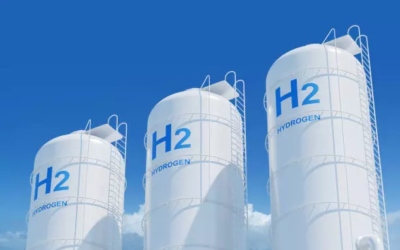
Hydrogen release from batteries in ATEX zones: how to ensure safety?
The release of hydrogen in batteries, especially those used in high-energy applications such as lithium-ion batteries, represents a major risk in ATEX zones (areas at risk of explosion). As hydrogen is an extremely flammable gas, it is crucial to adopt strict measures...
See all our products
Sound and light signalling products, grounding systems, non-ATEX signalling, ATEX connections…