In high-risk industrial environments, ATEX regulations impose strict rules to prevent explosions linked to explosive atmospheres. These requirements apply to the design, installation and maintenance of equipment. ATEX maintenance guarantees not only the safety of operators, but also regulatory compliance and the longevity of installations. As a specialist in industrial risk prevention, ADF Systèmes helps companies to implement reliable and appropriate solutions.
What is ATEX maintenance?
ATEX maintenance refers to all checking, servicing and repair operations carried out on equipment installed in hazardous areas. Unlike conventional maintenance, it must take into account specific standards and comply with rigorous procedures to avoid compromising site safety.
The stakes are many: protecting employees against serious accidents, ensuring the continuity of production processes, and meeting the legal obligations imposed by the ATEX directive. Ignoring or neglecting these operations exposes the company to major risks, both human and financial.
2. The different types of ATEX maintenance
There are several approaches to ATEX maintenance, each adapted to a particular situation.
Preventive maintenance consists in carrying out regular, planned checks: visual inspection of equipment, electrical checks, functional tests. It helps reduce the probability of incidents.
Corrective maintenance is carried out after an identified fault or defect. In this case, it is imperative to use only ATEX-certified parts to maintain the conformity of the installations.
Finally, predictive maintenance is based on advanced technologies (sensors, data monitoring) that anticipate failures before they occur, offering greater safety and efficiency.
Besoin d’un devis ?
Produits de signalisations sonores et lumineuses, systèmes de mise à la terre, signalisation non ATEX, connections ATEX…
Key steps to successful ATEX maintenance
Effective ATEX maintenance is based on a precise methodology. It starts with the identification and classification of equipment present in ATEX zones. This mapping enables us to prioritize interventions.
Planning and documentation are essential: every operation must be traced and tracked to meet regulatory requirements.
The choice of spare parts is critical: they must carry ATEX certification to guarantee their compatibility.
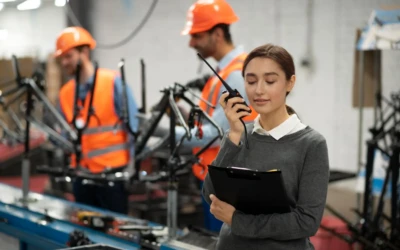
Interventions must be carried out by trained and qualified technicians, capable of applying procedures in complete safety. Finally, traceability and follow-up ensure that the installation remains compliant over time.
Mistakes to avoid in ATEX maintenance
Even with good organization, certain mistakes are frequently made in ATEX maintenance. These include
- Neglecting periodic inspections, which can lead to failures that are invisible in the short term but critical in the long term.
- Replacing a component with a non-certified part immediately compromises equipment conformity.
- Entrusting work to unqualified personnel may jeopardize the integrity of ATEX zones.
- Deferring maintenance operations for reasons of cost or time: this strategy always ends up generating more risk and expense.
ATEX maintenance is an essential element in reconciling safety, compliance and operational efficiency in high-risk environments. It requires a methodical approach, a rigorous selection of parts, and interventions carried out by skilled technicians.
Rather than seeing maintenance as a constraint, it should be seen as a strategic investment that protects teams, reduces production stoppages and guarantees the longevity of equipment.
When you work with an expert like ADF Systèmes, you get solutions tailored to your needs, and a partner you can trust to help you master ATEX issues.